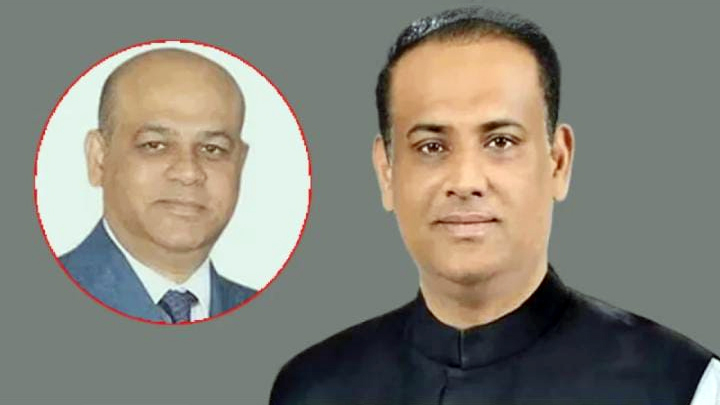
Why Are Religious Scholars Not Vocal Against Child Rape in Madrasas, Asks Asif Nazrul
Dr Asif Nazrul, former adviser for law, justice and parliamentary affairs in the interim government, has questioned the silence of the religious scholar community over heinous crimes such as the rape and sexual abuse of children in madrasas. He called on leading scholars and religious speakers to speak out publicly against these crimes.
Asif Nazrul made the remarks in a post on the social media platform Facebook late on Friday night (23 October). His post combined personal respect and experience with a sharp question about the silence of a section of the scholar community.
In the post he wrote that there are many respected people in Bangladesh's community of religious scholars. He said he had seen some of them up close while performing Hajj, at prayer times, or while listening to Islamic sermons. He also noted that he had been impressed by the humanitarian work of some scholars such as Maulana Ahmadullah.
But the centre of his remarks was another point. He wrote that beyond them, there are many others in the wider scholar community, such as madrasa teachers. Some of them are involved in grave major sins such as the rape and sexual abuse of children. He commented that the number of people involved in such crimes may be small, but it is not negligible at all.
In Asif Nazrul's words, they continue to commit such heinous sins day after day — the kind of sin for which Allah gave the severest punishment to the people of the time of Hazrat Lut (AS). By drawing this religious reference, he sought to convey the gravity of the crime.
He wrote that he is very surprised that a large part of the scholar community is never seen to speak out against these criminals. He also noted that they issue fatwas on many subjects — food, clothing, entertainment and freedom of speech.
In the post he further wrote that in a couple of cases, mobs are even formed and people are killed. Yet why leading scholars, popular religious speakers or clerics cannot speak out against the most heinous crimes of rape and sexual abuse committed within their own community — that is the question he raised directly.
Asif Nazrul wrote that there are various anti-Islam conspiracies in this country. The scholar community must understand that it is because of people's love and respect that they have survived with honour amid those conspiracies. But he alleged that instead of speaking out against crimes such as rape and sexual abuse, some of them are showing sympathy towards the criminals.
His warning was that if this is done, the responsibility for these crimes will in some way fall on them as well. Many of them will become victims of misunderstanding. Overall, people's love and respect for the scholar community will diminish. He also believes that Qawmi madrasas in particular will be harmed in various ways as a result.
At the end of the post, expressing hope, he wrote that he hopes the leadership of the scholar community will wake up soon. He expressed the expectation that stern statements, in the light of religious discipline, against heinous crimes such as rape and sexual abuse in madrasas will be heard from them.
He also hoped that the scholar community themselves would speak out against the criminals and demand exemplary measures. In other words, his call was not limited to condemnation alone; he also spoke of taking a public stand against the criminals and raising demands for effective action.
This public question from a former law adviser has brought the issue of child abuse in madrasas back to the fore of discussion. What remains to be seen now is whether any public statement or initiative on the matter follows from leading scholars and religious speakers after his call.