UN Chief Race Enters Decisive Phase as New Contender Lana Nusseibeh Arrives
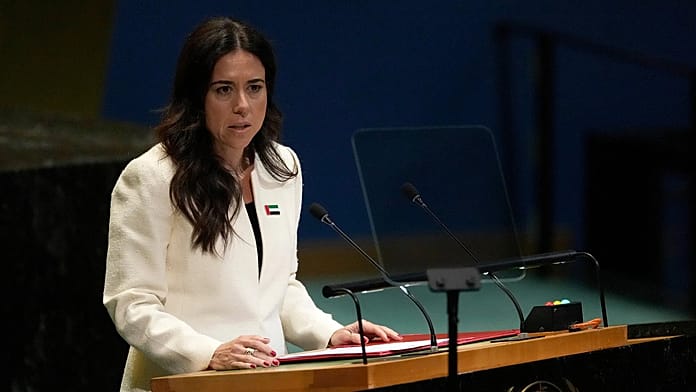
The race to elect the next Secretary-General of the United Nations has entered its final phase. The UAE's star diplomat Lana Nusseibeh has entered the race, challenging front-runner Rebeca Grynspan at a decisive time for the future of the global organisation.
In the UN's more than 80-year history, there has never been a female secretary-general. The prospect of a woman leading the organisation is also fuelling excitement around this race.
As part of the complex election process, an informal straw poll of officials in the deciding UN Security Council last week gave Grynspan a narrow lead over her closest competitors: Guyana's former Foreign Minister Carolyn Rodrigues-Birkett and Argentina's International Atomic Energy Agency Director-General Rafael Grossi.
But after receiving two opposing votes, the race has been relaunched, allowing new candidates to participate.
The winner needs at least nine votes from the 15-member Security Council without opposition from any of the five permanent members — the US, the UK, France, China and Russia — and the Council has until the end of December to choose the successor to current UN chief Antonio Guterres, before the UN General Assembly confirms the appointment.
Campaigning alongside Grynspan, Grossi and Rodrigues-Birkett are former Ecuadorian Foreign Minister Maria Fernanda Espinosa, former Senegalese President Macky Sall, former UN Under-Secretary-General Olara Otunnu of Uganda, and Ecuadorian diplomat Ivonne A-Baki.
Senior UAE diplomat and Minister of State Lana Nusseibeh energised the race when her nomination was announced this week. She is known for her versatility in 'quiet diplomacy' in the campaign for peace and for creating space for wider political settlements.
Launching her candidacy, Nusseibeh said: 'I have spent much of my professional life working in and around the United Nations, and I have seen first-hand what determined diplomacy can achieve — countries with profound differences finding common ground, and agreement where people said agreement was impossible.'
In her vision statement, she puts peace and security at the core while also promising to deliver across the board on development and human rights, as well as reform the organisation around focus and results.
Nusseibeh said: 'I am standing to be secretary-general because I believe this is a moment to act with greater urgency: to act earlier, bring people together across difference, and drive the work forward until it produces concrete results.' She added: 'I wish to offer myself to this office as I would serve it: speaking frankly with every government and answering to none.'
A highly regarded 48-year-old diplomat who grew up between Abu Dhabi and the UK in a family of well-known political figures, Nusseibeh previously served as the UAE ambassador to the UN and is credited with elevating the UAE's profile during that time. She also led the UAE's successful bid for a Security Council seat.
During the country's 2022 to 2023 term, Nusseibeh secured the adoption of Resolution 2720, which opened the way for humanitarian aid deliveries into Gaza. A Hebrew speaker, she said she secured support for the resolution by arranging visits from Council members to the Rafah border crossing.
If she succeeds, Nusseibeh would become the first woman to lead the United Nations since its establishment in 1945, the first of Palestinian descent, and the second Secretary-General from the Arabic-speaking world after Egypt's Boutros Boutros-Ghali.
Nusseibeh said on Wednesday: 'I think it would be great if the next secretary-general is a woman, but I am not running because I am a woman; I am running because I am stubbornly optimistic about the future of the United Nations and I believe we need someone who is relentless in the pursuit of diplomacy to open doors.'
Meanwhile, Costa Rica's 70-year-old former Vice President Rebeca Grynspan was born to Jewish parents who fled Poland before World War II. In a May interview she said: 'I know exactly what wars take away from you and what peace allows you to do.' Currently Secretary-General of UN Trade and Development (UNCTAD), Grynspan said she agreed with US President Donald Trump's 'constructive' criticism that 'the UN has great potential, but it's not living up to that potential', and that a reformed UN can make a difference.
With the December deadline approaching, all eyes are now on the Security Council. Who ultimately succeeds Guterres in this race, enlivened by the arrival of a new contender, remains to be seen.