Desert Wonder, the Great Mosque of Djenne: The World's Largest Mud Mosque Survives on a Whole City's Love
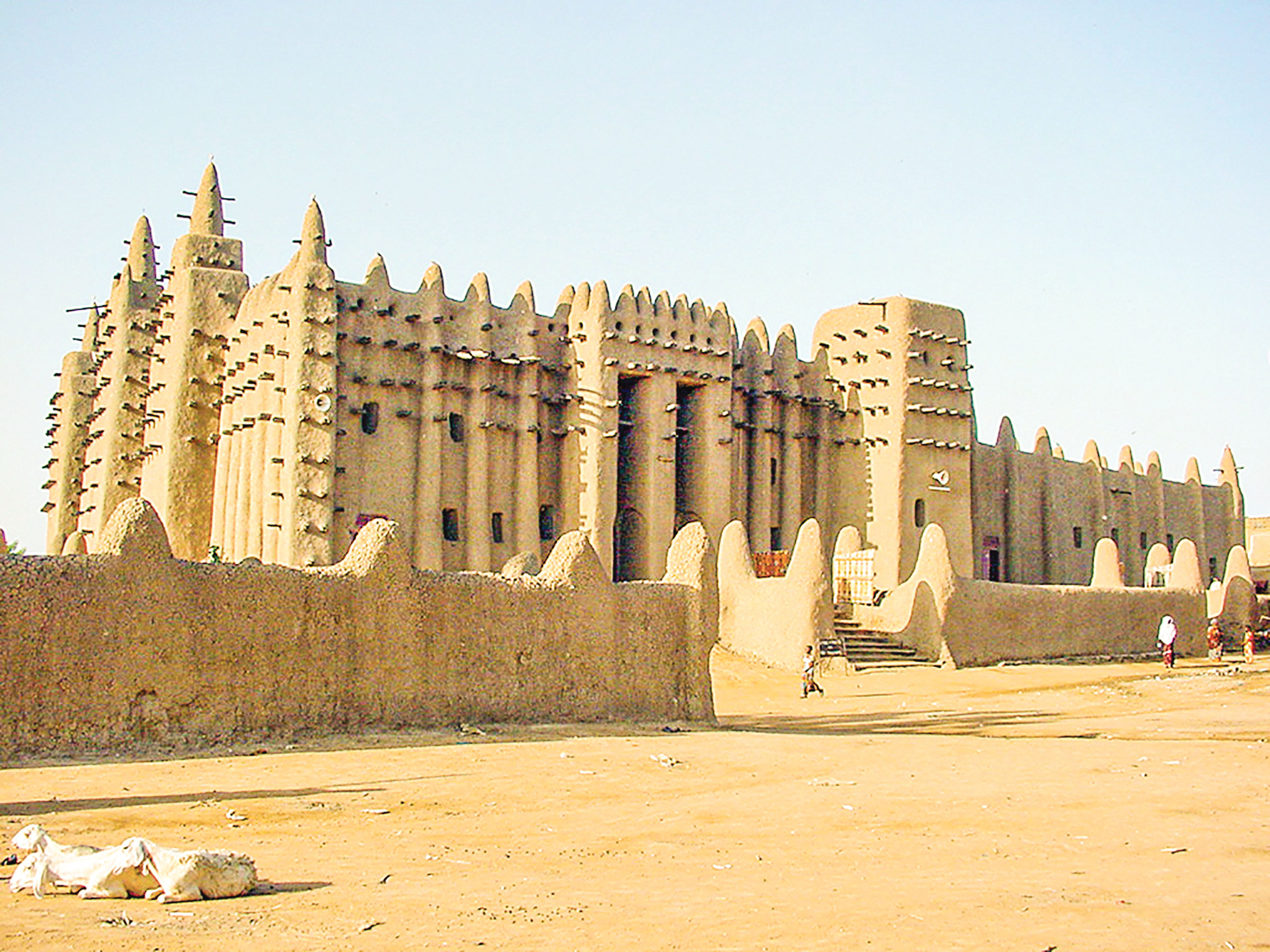
In the ancient city of Djenne, rising from the basin of the Bani River in the West African country of Mali, stands an architectural wonder. It is the Great Mosque of Djenne — the world's largest mosque made of mud, telling a unique story of the spiritual bond between people and nature.
Standing proudly amid the hot desert winds, this reddish-brown structure is an enduring symbol of African Sudano-Sahelian architecture. It has also been recognised as a UNESCO World Heritage Site.
A vast, historic structure usually brings to mind marble, stone or fired-brick masonry. But the Djenne mosque was built from entirely different materials — sun-dried mud bricks, called 'fere' in the local language, and a special mixture of sand, rice husks and mud.
Countless palm-wood beams jut out of the mosque's walls like needles. At first glance they may look like a structural design, but they are mainly used as the mosque's permanent scaffolding, which can be climbed like ladders during repair work.
With its massive three-domed walls and towering minarets, the whole mosque looks like a royal fortress. Although the desert heat rages outside, the thick mud walls keep the interior cool and serene.
The history of this mosque reaches back to the thirteenth century. When Djenne's 26th king, Koi Konboro, embraced Islam, he demolished his royal palace and built a great mosque on the site.
For many centuries, the place was known as one of the leading centres of Islamic learning in North and West Africa. Djenne thus became not only a city, but also a historic centre of scholarship and religious education.
Over time, and amid political change, the original building eventually fell into decay. Later, in 1906-1907 during French rule, the present structure was rebuilt through the meticulous craftsmanship of local master builders, preserving the traditional ancient design.
The most thrilling and exceptional aspect of the Djenne mosque is the way it survives. Being made of mud, its plaster is eroded every year by Africa's intense monsoon rains and storms. Yet it does not collapse, because the people of the whole city of Djenne keep it alive with deep affection.
Every spring, a historic festival is held here called 'Crepissage'. It can be called the city's biggest festival of joy, and preparations for it begin several days in advance.
For the festival, a special mud is prepared from river silt, rice husks and water and left to soak for several days. On the festival day, before dawn breaks, the whole city wakes to the beat of traditional drums.
Women carry water from the river, youths race with loads of mud mixture on their shoulders, and young people climb the walls on the palm beams to apply fresh mud plaster to the mosque. Under the guidance of experienced elder builders, the entire mosque takes on a new appearance within just a few hours.
While modern architecture is trapped in the mechanics of brick, stone, iron and concrete, the Great Mosque of Djenne takes people back to the earth and to nature. The mosque survives to this day as a living poem of the Sahara region's people's artistry, social solidarity and heritage.