Iran Announces a 'Father of All Bombs' in Reply to the 'Mother of All Bombs', Says Missile Stockpile Has Grown One and a Half Times
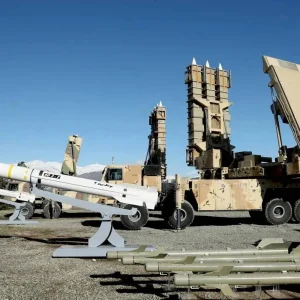
Iran's Islamic Revolutionary Guard Corps (IRGC) has announced final preparations to unveil a new weapon called the 'Father of All Bombs', in reply to the United States' 'Mother of All Bombs'. The force's spokesman, Hossein Mohebbi, made the announcement on Wednesday (21 October).
In a statement published by Iran's Young Journalists Club news agency, Mohebbi said: 'We are in the final preparation phase of unveiling the Father of All Bombs. It will be a completely new surprise for the enemy.' He did not, however, disclose any details about the weapon's type or destructive power.
The announcement came at a time when reports have been published of a plan to strike Iranian military bases with the US arsenal's 'Mother of All Bombs' if President Donald Trump gives the order. In a suggestive remark last Friday, Trump had hinted at using that bomb against Iran's nuclear facilities.
The GBU-43/B Massive Ordnance Air Blast (MOAB), known as the 'Mother of All Bombs', weighs about 9,800 kilograms, or 21,600 pounds. It is one of the largest and most powerful non-nuclear conventional bombs in the US arsenal. It was first used in April 2017, during Trump's first term, to destroy an IS tunnel network in Afghanistan.
The IRGC has deliberately kept specific information about the new weapon secret. But back in 2017, the IRGC Aerospace Force had tasked its defence industry with building a domestically made 10-tonne conventional bomb. At the time it was claimed the bomb would be heavier and more destructive than the US 9.8-tonne MOAB, and could be dropped from an Ilyushin (Il-76) strategic transport aircraft. Analysts believe this announcement is essentially the formal unveiling of a modern, upgraded version of that same project.
In the same statement, Mohebbi claimed that Iran's missile numbers have increased by about one and a half times since the 12-day war with Israel in June 2025. Without giving any specific figure, he said the missiles' quality has also improved unprecedentedly — their range, destructive power and precision-strike capability have all risen significantly.
Mohebbi said Iran is making major changes to its defence policy and military strategy, whose main goal is to build a permanent and complete deterrence system. In his words, Iran's policy in the past was purely defensive — if a country attacked, Iran would only respond. But the policy now is that if attacked, Iran will not only respond but will launch a direct counter-attack.
He further stressed that Iran will take measures equal to any attack, and that the country's military strategy will rely increasingly on 'asymmetric warfare'.
Behind this announcement lies the history of recent conflict. On 28 February, when Israel and the United States launched a joint military operation against Iran, Tehran responded with a series of attacks on Israel and on US military bases in the Arab region.
Later, in June, Washington and Tehran signed a memorandum of understanding, but those peace talks collapsed because of differences over navigation security and rights in the strategically important Strait of Hormuz.
Amid such tension, this new weapons announcement is being seen as a clear message from Tehran to Washington. But when and how the weapon will actually be unveiled, and what its real capability is, will require more waiting to know.