

Scorching by Day, Bitterly Cold by Night: Why Desert Temperatures Fall So Suddenly
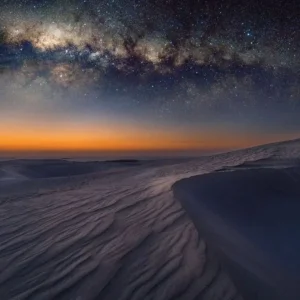
In the fierce sun of the day, desert sand becomes so hot that standing there for long is difficult. Yet after the sun sets, the temperature in that same desert falls rapidly, and after unbearable daytime heat the night can sometimes feel bitterly cold. Why does the temperature change so much within a few hours in the same place? The answer lies in the nature of the desert itself.
The main reasons are the desert's dry air, low humidity and the process of heat radiating towards the night sky. During the day, desert sand and rock heat up quickly in the sun's heat. After sunset, that heat begins to radiate towards space.
Because there is little water vapour and cloud in the air, there is also relatively little natural barrier to holding in heat. As a result, within a few hours of the night the ground and the air close to it become much cooler.
Because rainfall is low in deserts, the amount of water vapour in the air is also usually low. Water vapour plays an important role in holding heat in the atmosphere. In humid regions, water vapour absorbs part of the heat radiated from the surface and radiates it again in different directions, including back towards the surface.
But because desert air contains little water vapour, the effect of this process is comparatively weak there. As a result, the ground loses heat quickly at night and the temperature keeps falling.
Clouds also influence how much the night temperature falls. Clouds absorb part of the infrared radiation leaving the surface and radiate it back downwards, slowing the rate at which the ground loses heat.
On the other hand, when the sky is clear, there is relatively little obstruction to heat radiation. Where cloud cover is low in a desert, the night temperature can therefore fall rapidly.
The surface of desert sand and dry soil heats up quickly in sunlight, but unlike water it cannot store a huge amount of heat. The heat stored in the surface layer of sand during the day escapes through radiation after sunset.
As a result, the night temperature can be much lower than the daytime heat. However, the extent of this change depends on the type of sand, soil structure, wind speed and humidity.
Night temperatures differ because of a desert's location, season, altitude, cloud presence and air humidity. Nights can be quite cold in some deserts, while temperatures remain comparatively higher in others. In humid deserts near the coast, night temperatures are often relatively warm.
According to NASA, although the average daytime temperature in deserts is about 38 degrees Celsius, in some deserts the temperature at night can fall below freezing. However, this does not apply to every desert or every night.
Behind this contrast between desert day and night temperatures is mainly the difference between absorbing the sun's heat and losing that heat at night. Dry air, scarce clouds and quickly heating ground together create an environment where, after fierce daytime heat, the temperature can drop significantly at night. The sources for this report are NASA, the US National Weather Service (NWS) and Live Science.



