Putin Agrees to Trilateral Peace Talks in Abu Dhabi as Trump Steps Up Push to End Ukraine War
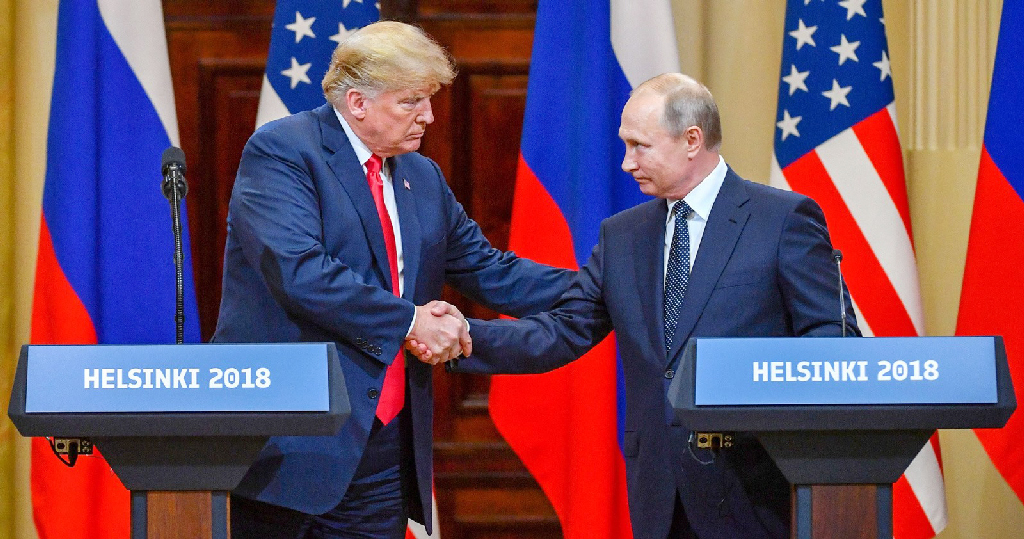
US President Donald Trump has stepped up diplomatic efforts to end the Ukraine war. Russian President Vladimir Putin has agreed to start fresh trilateral peace talks between Ukraine and Russia next month under Trump's mediation, the Kremlin said after a meeting in St Petersburg on Wednesday with Trump's special envoy Steve Witkoff. Abu Dhabi, the capital of the United Arab Emirates, has emerged as a possible venue, and the talks could begin on November 10 or later.
Reuters reported that Washington's new initiative on the conflict, regarded as Europe's bloodiest since the Second World War, comes at a time when Moscow and Kyiv remain far apart on the terms of a peace agreement. Concern is also growing that US military and intelligence support for Ukraine could shrink. Yet while Putin agreed to new talks, he gave no clear sign of stepping back from the war's core objectives.
Wednesday's meeting between Putin and Witkoff at a royal palace in St Petersburg lasted about three hours. It was the US envoy's ninth direct meeting with Putin. As a goodwill gesture at the start of the talks, Russia released Stephen Hubbard, a retired American schoolteacher who had been detained in Russia for more than four years on accusations of fighting as a mercenary for Ukraine. Trump had previously asked Putin to free him, and Russian state media confirmed the release.
According to the Kremlin, the proposed trilateral talks will be held at a technical level and will discuss how the security of both Russia and Ukraine can be ensured after the war ends. No details were given about the framework of the talks, the specific roles of the participants, or the outline of any final settlement.
Trump won his election campaign after promising to end the Ukraine war, once claiming he could finish it within 24 hours of taking office. More than two years after that pledge, the fighting continues. Recently Trump has increased pressure on Kyiv, saying the time has come for Ukraine to end the war, or the country will face a very bad situation.
The gap between the two sides' positions, however, remains wide. Putin's main demands include full Russian control over the Donetsk region of eastern Ukraine, rejection of Ukrainian membership of NATO, and a comprehensive peace agreement instead of a temporary ceasefire. There is no sign that Ukraine is ready to accept those terms.
The last US-mediated peace talks were held in February. The diplomatic process then stalled after the United States and Israel began a war against Iran. The renewed initiative therefore brings to the surface not only the Ukraine war but also the wider pressures on Washington's foreign policy.
The day before meeting Putin, Witkoff held talks in Oslo with Ukrainian President Volodymyr Zelenskyy, the leaders of Finland and Norway, and European and NATO representatives. He told Putin that some momentum had been created in Oslo. According to a US official, Ukraine presented new ideas and proposals there, but Moscow is not fully satisfied with them. Putin aide Yuri Ushakov told reporters after the St Petersburg meeting that some elements of the Oslo discussion had not fully met Russia's expectations.
Zelenskyy, for his part, has said he wants to discuss the key issues for ending the war in a trilateral meeting with Putin and Trump. The Kremlin's position is that the two leaders' aides must first prepare in detail, so that any direct meeting between Putin and Zelenskyy is realistic and fruitful.
The Trump administration's recent contacts with Russia have created fresh strain in relations between Washington and Kyiv. Earlier this month Trump announced a diesel export deal with Russia aimed at lowering fuel prices in the United States. Fuel prices there rose after the US attack on Iran, putting Trump's Republican Party under political pressure ahead of November's legislative elections.
After the diesel deal, Ukraine complained that some intelligence sharing with the United States had been disrupted, and that problems had also arisen with the Starshield satellite system used for military communications. Zelenskyy, however, said an understanding was reached at Tuesday's Oslo meeting to resolve those problems.
Citing US officials and people familiar with the matter, the Wall Street Journal reported on Wednesday that billionaire Elon Musk last week ordered a slowdown of a military version of SpaceX's Starlink satellite service used by Ukraine. Ukraine relies on the service to detect Russian ballistic missile attacks and track their movement. Reuters could not immediately verify the report. Musk said that if such a decision was taken, it would have been taken by the US military or the president. Trump also said he bore no responsibility. On Wednesday US Secretary of State Marco Rubio reiterated that Washington has not withdrawn Ukraine's ability to use Starlink.
Putin's agreement to restart trilateral talks is progress for the Trump administration's diplomacy, but the end of the war remains uncertain. On fundamental questions such as Ukrainian territory, NATO membership and post-war security, the two sides hold opposing positions. If talks begin in Abu Dhabi, their real test will be how much each side is willing to concede on its basic demands. For now the door to talks is opening, but whether that door leads to the end of the war will depend on a practical settlement over territory, security and the future political order.