
Iran refuses to give up its enriched uranium as Trump faces a final decision on winning 'the good way or the bad way'
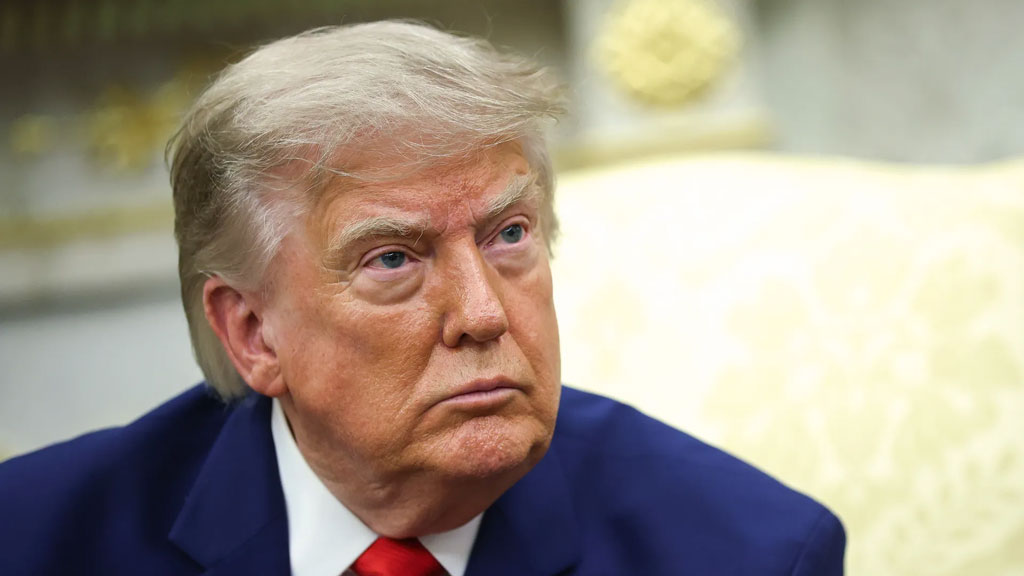
Claiming that Washington is in a very strong position on Iran, US President Donald Trump has said a final decision must now be made on the strategy for victory. Facing reporters in the Oval Office of the White House on Tuesday, local time, he posed the question: 'Do we want to win the good way, or do we want to win the bad way?'
Trump said he had spoken to European leaders about the issue and asked for their help, but they had not agreed to provide any assistance. He aired Europe's reluctance publicly as well.
At an election rally in Greenville, North Carolina, Trump claimed that Iran's main 'dream' is for the US war to be prolonged beyond November's midterm elections. Yet he also assured supporters that the conflict would end soon, saying that as soon as the war is over, oil prices on the world market will fall sharply. He described the temporary rise in oil prices as a very small sacrifice for keeping nuclear weapons away from the world's number-one sponsor of terrorism.
Iran, meanwhile, has flatly refused to send its enriched uranium out of the country. Tehran has formally rejected an international proposal under which roughly 400 kilograms of nuclear material would be placed in Russia's custody.
It is at precisely this moment that Pakistan's army chief Asim Munir is visiting Tehran to settle the dispute between Washington and Tehran and to strengthen mediation. Iranian officials, however, have made clear that before sitting down to any new talks, the United States must correct the mistakes of its past behaviour and rebuild trust.
Recalling the US attack that came in the middle of diplomatic negotiations, Iranian representatives have said they will not compromise beyond the seven-point proposal they have put forward. In other words, even at the negotiating table, Tehran is giving no sign of retreating from its conditions.
The White House has told the Qatar-based outlet Al Jazeera that the United States has no plan to launch a military strike on Iran before the 3 November midterm elections. But despite this assurance from the White House, tension in the region has not subsided.
The deployment of three powerful US aircraft carrier strike groups in the Middle East, and US Defense Secretary Pete Hegseth's visit to Israel, have raised many doubts and questions about Washington's real intentions.
Amid the unfolding situation, Israeli Prime Minister Benjamin Netanyahu has said he recently spoke by phone with President Trump about the importance of ensuring the fall of the Iranian government. In a statement issued by Netanyahu's office, he said: 'We are fully committed to ending the current Iranian regime. I have discussed this with President Trump many times, including yesterday.'
Netanyahu also said that if Iran's government falls, the Lebanese armed group Hezbollah will fall as a natural consequence. Through that, he expressed hope, the path to peace with Lebanon will be created.
Washington has claimed that US sanctions, military strikes and a naval blockade have put Iran's economy and military under pressure. The United States has even said that Iran's Revolutionary Guard Corps (IRGC) cannot pay its own soldiers, and that its regional allied armed groups are also in financial crisis.
On the other hand, the United Kingdom will deploy Royal Air Force (RAF) Typhoon fighter jets to protect Saudi Arabia's cities and important infrastructure from air attacks by Yemen's Iran-backed Houthi rebels.
According to international analysts, with the US election ahead, diplomatic mediation on one side and military pressure and a regime-change strategy on the other — taken together, the geopolitics of the Middle East around Iran is heading towards intense uncertainty. Trump's 'good way or bad way' remark has only deepened that uncertainty.