Cost-of-Living Anger Spreads Across Europe as Students and Public Take to Streets
Anger over the cost of living is growing across Europe. Sky-high rents, rising fuel prices and inflation are squeezing people. Economic growth has effectively stalled, the report said.
In France, Italy, Spain and Greece, interest rates on debt repayment are rising. As a result, a large part of the money that would have been spent on rebuilding schools, housing subsidies or compensation for drought-hit farmers is going to pay creditors.
In France, vandalism and looting took place behind peaceful protests. In Italy, goods supply systems are being disrupted. Large numbers of people are gathering in Spain's historic squares to protest. Authorities have deployed additional security forces in Paris and Rome to handle the situation.
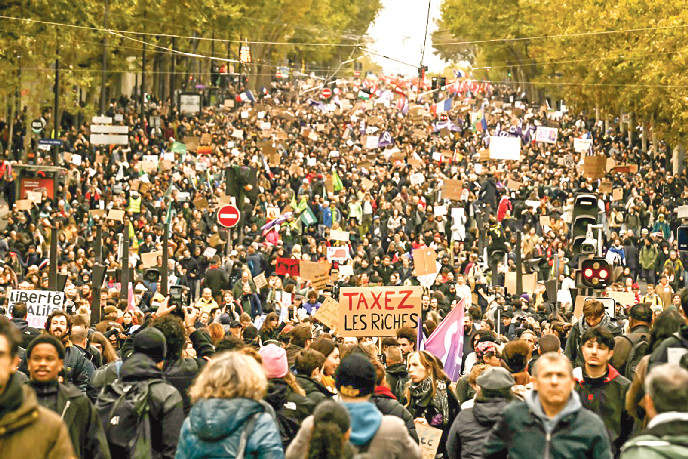
In France, students have blockaded educational institutions for several weeks. Their demand is to increase government allocation for education. A few days ago, hundreds of thousands of people joined them on the streets to protest the rising cost of living.
Poria Amir Shahi, an MP from France's Green Party, said no generation in the past 50 years has had to face such a difficult challenge.
Last month, the eviction of an 87-year-old retired woman from her home in Madrid sparked protests across Spain. People took to the streets demanding housing security and rent control. Between 2015 and 2025, house prices in Spain rose by 80 percent, while wages rose by only 30 percent in the same period.
Similar protests spread to Portugal. To meet demand from excess tourists, house prices in the country have risen to almost three times the 2015 level, the report said.
In Albania, people have been protesting peacefully since May. They allege the government is widely corrupt. A proposal by Jared Kushner, son-in-law of US President Donald Trump, to build a luxury tourism centre also angered them. After students joined the movement last week, the situation turned violent and students demanded the government's resignation.
Last week, thousands of students and teachers took to the streets in Athens and about 50 cities in Greece demanding increased government allocation for education, safe school buildings and affordable housing. In Germany, small rallies were held in Berlin and Hanover to protest cuts in education allocation.
In several cities in northern Italy, students marched to protest low wages and the rising cost of living. Italian state broadcaster Rai, citing a police report, said the total number of protesters in different cities was about 10,000. The government deployed more than five hundred soldiers in Milan to normalise the situation. Prime Minister Giorgia Meloni said protesting is everyone's right, but destroying cities will not be accepted in any way.
Activity on social media over the French protests has increased. According to online monitoring platform Visibrain, on one day last week more than 2.2 million tweets per hour were posted about the protests, almost three times the peak of the Yellow Vest movement in 2018.
Temperatures are falling, yet there is no sign the fuel crisis is easing. Phuc-Vinh Nguyen, head of the Energy Centre at the Jacques Delors Institute, said Germany's gas reserves have fallen close to their lowest level. He expressed fear that if gas prices rise, the cost of heating German homes will increase sharply.