NEIR to Be Enforced in Phases from January 1, Traders Seek Legal Route to Import Used Phones
The Bangladesh Telecommunication Regulatory Commission (BTRC) is planning to fully enforce the National Equipment Identity Register (NEIR) system to control the use of illegal mobile phones. In the first phase, from January 1, illegally produced and imported phones will be identified and their use controlled.
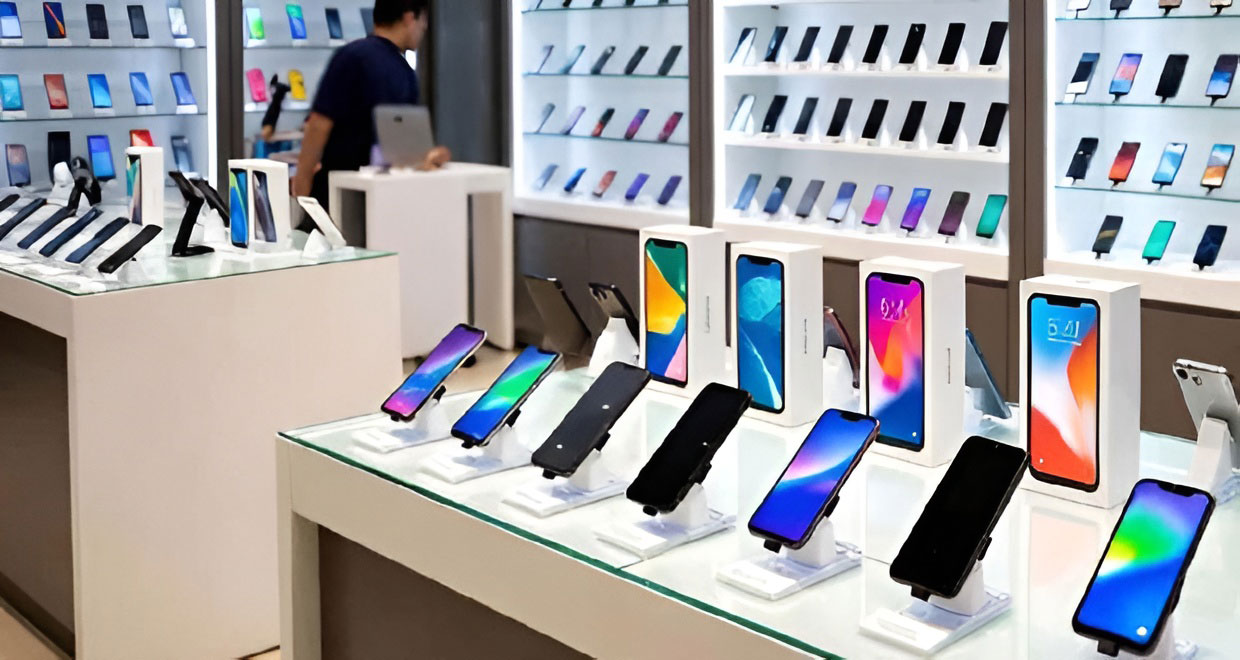
Before that happens, traders in this sector have sought an opportunity to legally import second-hand or used phones. They claim this would increase government revenue, give traders equal opportunity and ensure customers can buy phones at affordable prices.
Under the BTRC plan, illegal phones will be identified and controlled in the first phase, but phones with cloned or fake IMEI numbers will not be blocked. That measure will be added in the second phase.
NEIR is a system operated by the BTRC through which a handset's IMEI (International Mobile Equipment Identity) number is verified. Through it, illegal, fake or stolen mobile phones can be disconnected from the network.
Hafizur Rahman Rana, publicity secretary of the Mobile Business Community Bangladesh (MBCB), an organisation of unofficial mobile phone traders, and general secretary of the Bashundhara City Shopping Mall mobile phone traders' association, said more than 2 million people are directly and indirectly involved in the unofficial mobile business.
He asked where the opinions of ordinary traders would be reflected if important decisions are taken in meetings with only a few traders, leaving this huge population out of the discussion. His demand is that an opportunity to legally import second-hand mobile phones be given before NEIR is fully enforced.
The history of this initiative is long. The government first took steps to control illegal and unauthorised mobile phones in 2012. The BTRC then began policy-level work around 2018-19. But the activity stalled due to a lack of technical preparation and opposition from a section of traders.
Later, on July 1, 2021, the BTRC launched NEIR on a trial basis for the first time. However, the features to automatically block illegally imported handsets and to detect cloned handsets and obstruct their use were left out at that time.
Noting that illegal handsets cause Tk 2,000 crore in revenue loss every year, the National Board of Revenue (NBR) wrote to the BTRC on October 29, 2024 asking it to take steps to fully launch NEIR. On June 28, 2025, the Posts and Telecommunications Division gave approval on the matter.
Then, on October 29 last year, Faiz Ahmad Taiyeb, special assistant to the then interim government's chief adviser for posts, telecommunications and ICT, announced NEIR would be launched from December 16 that year. However, the launch deadline was pushed back again in the face of traders' demands.
According to BTRC documents, on June 9 this year the National Security Intelligence (NSI) wrote to the BTRC about fully enforcing NEIR, citing economy and public safety. The matter was then discussed at a Home Ministry meeting on July 2 and at a meeting chaired by the home minister on September 22. At the BTRC's latest commission meeting, a proposal was made to launch NEIR by January 1, 2027.
BTRC officials, speaking on condition of anonymity, said the government is emphasising stopping the use of illegal phones to control law and order. The BTRC has been informed in writing several times for that purpose. Accordingly, the BTRC is planning to fully enforce NEIR in phases from January 1.
On the matter, the prime minister's telecommunications and ICT adviser Rehan Asif Asad said, 'We want to stop the use of illegal phones. But there will be no hurry in this case. An effective solution will be found by talking to all sides.'
According to BTRC information, until June this year its NEIR system held data on 770.6 million IMEI numbers. Of those, at least 411.8 million IMEIs were on the grey list, that is, the unauthorised list.
MBCB senior vice-president Shamim Molla said, 'We have heard planning is under way to fully launch NEIR. We have no objection to that. But we want arrangements so that we can legally import the sets we sell, that is, second-hand sets. Otherwise not only traders will be harmed, ordinary buyers will also be harmed. They will lose the opportunity to buy phones at low prices.'
All eyes are now on the first phase due to start from January 1. At the same time, the future of millions of people in this sector depends on what decision the government and the BTRC take on the traders' demand to legally import second-hand phones.