Why Shrimp Got the Word ‘Fish’ in Bengali but the Crab Did Not: The Science of Language and Habit
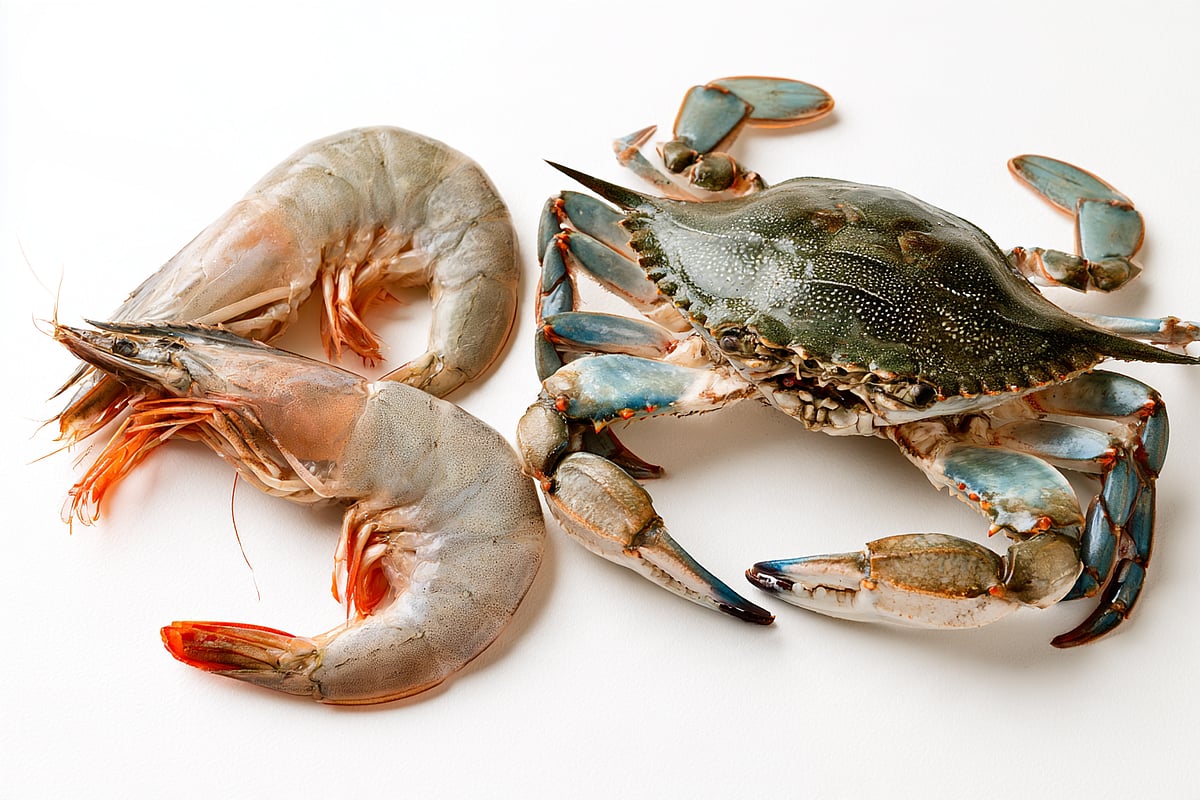
Standing before a fish seller at the market, many people naturally ask, “How much for the shrimp fish?” But for a crab, nobody says “crab fish”; they ask, “How much is that crab?” Hidden in that small difference is a curious question: both live in water, both have hard shells and both end up on the plate — so why did one get the word “fish” attached to its name and the other did not?
One point needs clearing up at the start. A shrimp is not actually a fish, and neither is a crab. In biological terms both are crustaceans — joint-legged animals with shells. The lobster belongs to the same group.
Fish have backbones, but shrimp and crabs do not. A fish’s skeleton is inside its body, while these animals are protected by a hard outer shell. Fish have fins; shrimp and crabs have jointed legs. Although they belong to the same wider group of animals, shrimp and crabs are not exactly the same kind of creature.
So how did “fish” become attached to the shrimp’s name? The answer has more to do with language and human habit than with science. In Bengali, the word for fish has become attached to the names of many water-dwelling animals; the shrimp is one example.
English has similar cases. Jellyfish and starfish carry “fish” at the end of their names, yet neither is a fish. Having the word “fish” in a name does not make an animal a real fish.
Appearance offers another possible explanation. A shrimp’s body is elongated, running in a fairly continuous line from head to tail, which from a distance can recall a small fish. When threatened, a shrimp curls its abdomen and flicks its tail to shoot backwards quickly, a movement that resembles swimming.
A crab, by contrast, has a broad, flattened body. Its small tail-like part is folded under the abdomen, and many crabs walk sideways. In looks and movement, it is hard to match a crab with a fish. Not all shrimp swim in the same way, however, and not all crabs only walk sideways.
How people catch these animals may also be linked to the naming. Shrimp are caught with nets in rivers, canals, wetlands and coastal waters, and farmed shrimp are sold alongside fish at markets. Crab catching varies by species and environment — in some places from mud holes, in others with traps — and after catching, crabs are often tied up to guard against their strong claws.
Kitchen habits may play a role too. Shrimp are cooked in countless ways — malai curry, shrimp with bottle gourd, shrimp with taro stems, fried, in gravy or mashed. The link between shrimp and everyday food is old. Eating a crab is somewhat different; the hard shell must be broken to reach the meat inside. Even so, crab is a popular food in many parts of the world.
Shrimp also carry major economic importance in Bangladesh. Especially in Khulna, Bagerhat and other coastal areas, shrimp farming is tied to many people’s livelihoods. Farmed shrimp are sold in domestic markets and exported abroad. Among the familiar species, golda and bagda stand out — golda is generally farmed in freshwater and in environments where salinity changes, while bagda is mainly farmed in saline or brackish coastal waters. As part of familiar food and trade, the word “fish” easily attached itself to the shrimp’s name in daily speech.
English also has the common term “shellfish”. Shrimp, crabs, oysters and various aquatic invertebrates are called by that name. Yet shellfish is not a single scientific class — shrimp and crabs are crustaceans, while oysters belong to the mollusc phylum. They are grouped under one name mainly because of practical human usage.
So what is the answer? A shrimp is not a fish, yet in Bengali it is called “shrimp fish” because of linguistic convention. Its appearance, movement, sale at markets and place in cooking all helped the name catch on. For the crab, the word “fish” never became customary. Which single reason mattered most is hard to say with certainty. Language does not always follow scientific classification; long human usage also shapes the meaning and identity of words.