

State Minister Anindya Islam Amit Hands Over Tk 40 Lakh of Medical Supplies to Jessore General Hospital
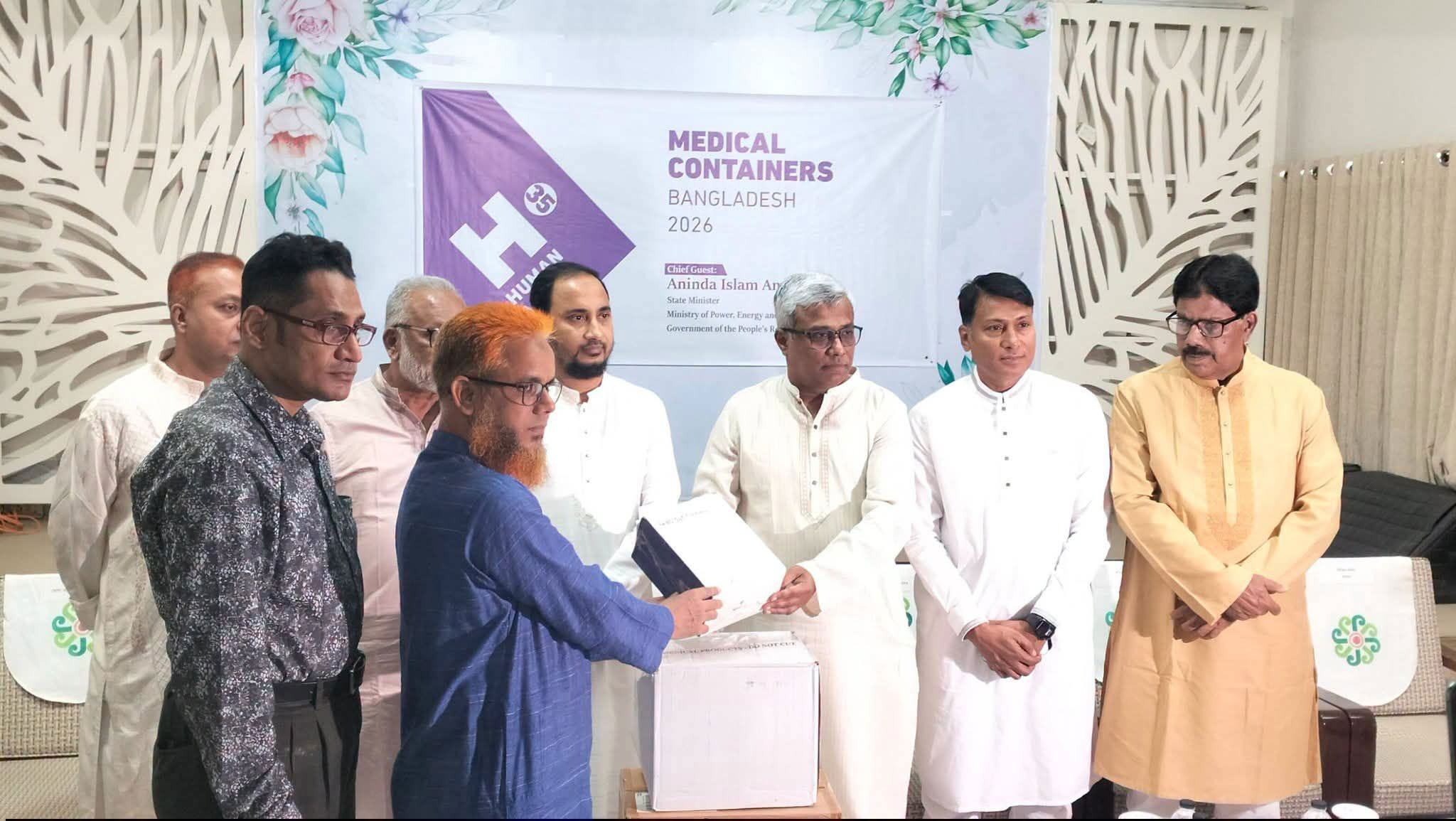
Medical supplies worth Tk 40 lakh have been distributed for patients of the 250-bed Jessore General Hospital. State Minister for Power, Energy and Mineral Resources Anindya Islam Amit handed the supplies over to the hospital authorities.
At a ceremony held on Friday (October 23) at noon in the auditorium of the local Circuit House, the state minister handed the medical supplies to the hospital's superintendent and the civil surgeon.
Handing over the supplies, the state minister directed health department officials to ensure that admitted patients receive them properly and free of charge. He said reaching patients was the main purpose of the initiative.
The supplies were distributed with the support of Human Appeal USA. The items handed over for the hospital's patients were collected with the assistance of the international aid organisation.
The distributed items include pain-relief injections, pampers for elderly patients, gloves, cannulas, clothing for doctors, and various supplies used in the operating theatre (OT) — the things needed most in everyday medical care.
Present at the ceremony were Deputy Commissioner Mohammad Ashek Hasan, Superintendent of Police Syed Rafiqul Islam, district BNP president Saberul Haq Sabu, and Zila Parishad administrator Delwar Hossain Khokon.
Also present were Jessore General Hospital superintendent Dr Hussain Shafayat, Civil Surgeon Masud Rana, National University programmer Arif Noor, and journalist Abdul Kader, among others.
The hospital authorities said that although the hospital has 250 beds, in practice it provides treatment to 500 beds' worth of patients — meaning it handles twice its capacity in patient pressure every day.
Despite that extra pressure and a severe shortage of medicines and medical supplies, the hospital has continued to serve patients, the authorities said. Receiving Tk 40 lakh of supplies amid the shortage will help ensure treatment for patients.
Shortages of medicine and equipment at district-level government hospitals are a long-standing problem. Patients often have to buy medicines and supplies from outside, an extra burden for the poor. If free distribution of these supplies is ensured, that burden should ease at least somewhat, those concerned believe.
It now remains to be seen whether the handed-over supplies actually reach patients free of charge, as the state minister directed. That responsibility now rests with the hospital authorities.


