No relief even in the holiday market: fish, flour and soap cost more in Dhaka's Meradia bazaar, and soybean oil may rise next
With the capital nearly empty during the Puja holidays, Ashraful, a resident of Block F in Banashree, came to Dhaka's Meradia market at 8:30 on Friday morning hoping prices might have eased a little. A walk through the market dashed that hope: nothing had become cheaper, and a few items had in fact gone up.
Ashraful said that a few days earlier he had bought rui fish weighing over a kilogram at 350 taka per kg; today the same fish was being priced at 380 taka — 20 taka more per kilogram. 'I thought prices might have come down a bit. Coming to the market I find rui is 20 taka dearer per kilo,' he said.
Nor was fish the only worry. Traders told him the price of soybean oil could rise next week as well. 'Today is Friday, after the Puja holidays. Most people have gone to their villages. I thought I would get things a bit cheaper, but no — prices are simply not coming down,' Ashraful said, adding: 'Income no longer matches household expenses. Running a life is becoming hard.'
Jasim Uddin, another shopper at the same market, reported the same experience. 'From bath soap to radish — nothing is within reach. From flour to fish, meat and vegetables, there is no relief in anything. We are living with discomfort now,' he said.
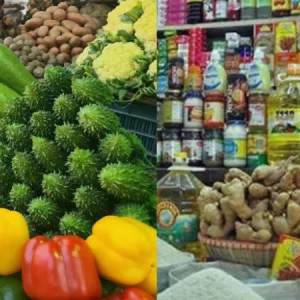
A survey of the market showed vegetable prices holding at their earlier elevated levels. Eggplant was selling at 100, 140 and 180 taka per kg depending on type; pointed gourd at 80, ridge gourd at 100, snake gourd at 80, bitter gourd at 100, papaya at 40, beans at 160, tomatoes at 160 and cucumber at 120 taka per kg. Cauliflower was 80 taka apiece and bottle gourd 70 to 80 taka.
Okra was 60 taka, yardlong beans 100, radish 80, green chillies 160, potatoes 40 and garlic 120 taka per kg. Sellers said winter vegetables have begun arriving — a time when prices would normally fall — yet this year prices have stayed where they were instead of easing.
The increases are even clearer on the grocery shelf. Within days, a 2 kg pack of refined flour has risen from 140 to 180 taka. Packet flour has gone from 65 to 70 taka, and sugar sells at 110 taka per kg. The cheapest loose rice, Guti Swarna, is 50 taka per kg, while aromatic polao rice is close to 200 taka per kg.
Everyday cleaning products cost more too. All kinds of bath soap are up by 5 to 10 taka. Wheel detergent powder has risen from 145 to 155 taka per kg and Wheel soap from 30 to 35 taka. Ginger has climbed from 160 to between 180 and 200 taka; coarse masoor lentils are 100 taka per kg and the finer variety 150 to 160 taka.
The only relief was eggs — down 10 taka to 140 taka a dozen. In the fish and meat market, beef was selling at 820 taka per kg, broiler chicken at 190, cock at 330 and local chicken at 660 taka. Rui ranged from 380 to 450 taka per kg depending on size, and pangas and tilapia were 330 to 350 taka.
Shopper Mansur Ahmed said: 'There is no peace in any product. Even tilapia is over 300 taka a kilo, and small fish are around 500. Don't even ask about the rest.' His conclusion: 'We just have to accept everything and carry on. There is nothing to say.'
On top of this, fresh anxiety has formed around soybean oil. Traders said its price could rise again, by around 14 taka a litre, according to what they have heard. A 5-litre bottle currently sells for 1,000 taka; if the increase comes, it could reach between 1,070 and 1,090 taka.
Russell Khan, owner of Russell General Store, said the printed prices of packaged goods have risen across the board — from bath soap to Wheel powder, toothpaste, flour and refined flour. He too said they have learned soybean oil may go up by 14 to 15 taka a litre.
Sellers have their counter-argument. Arif, a vegetable vendor in Meradia, said: 'I don't think prices will fall. If we buy at high prices, how can we sell cheap? We have to survive too.' Altogether, the gap between shoppers' expectations and actual prices stood out again on a holiday morning — there is still no sign of prices falling, while the feared oil increase threatens fresh pressure on household budgets.