Local government elections will be free, fair and neutral, says Speaker — 'no fair election in 17 years'

National Parliament Speaker Major (retd) Hafiz Uddin Ahmed Bir Bikrom has said the upcoming local government elections will be held in a free, fair and neutral manner. In his assessment, elections in the country have not been fair for the past 17 years, and it is the government's duty — both proper and necessary — to ensure that elections are free, fair and impartial.
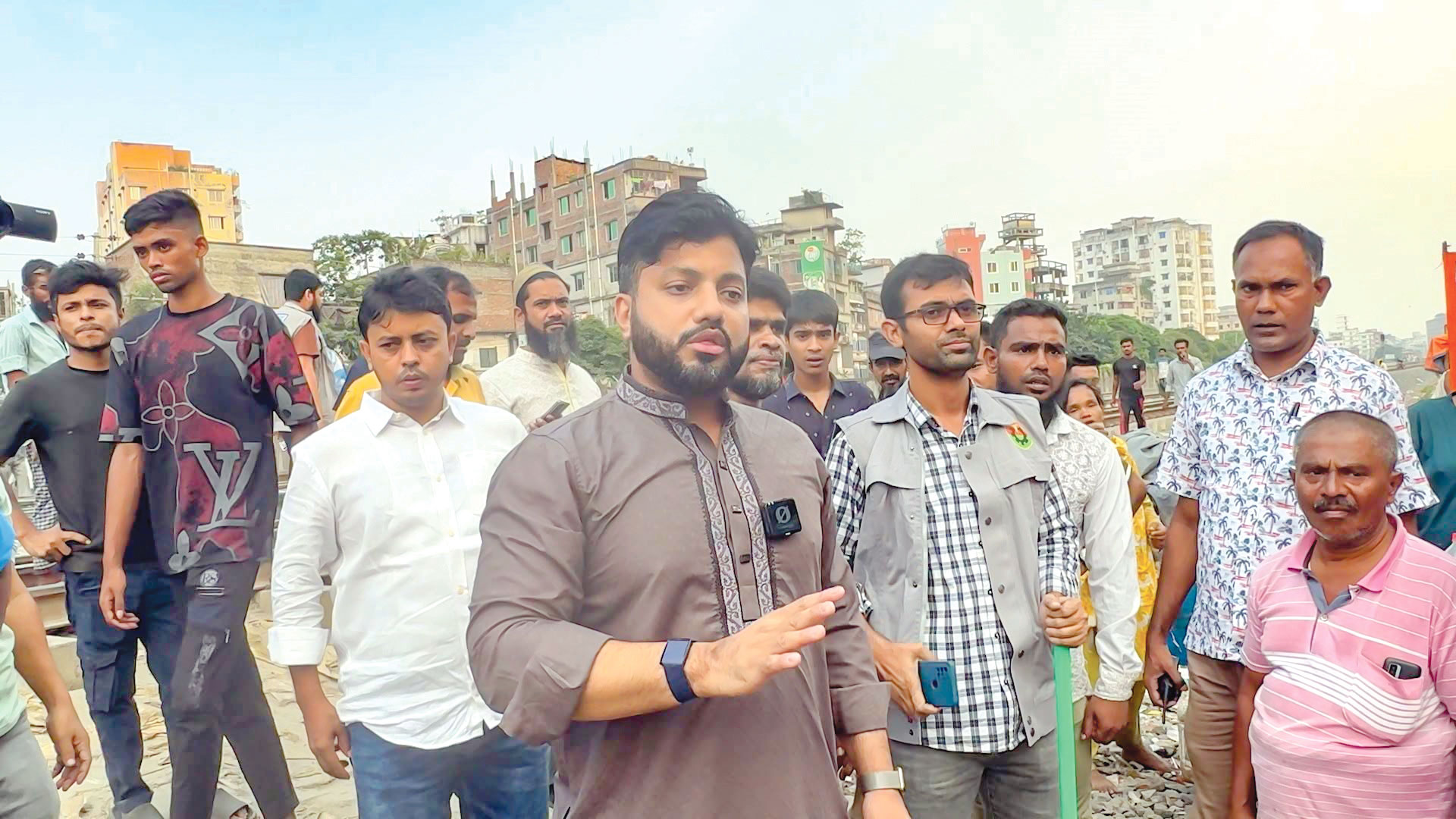
He made the remarks on Thursday at the Bhola Circuit House, answering questions from journalists. The Speaker faced the press before leaving Bhola for Dhaka at 11:30am, at the end of a three-day tour of his constituency, Lalmohan-Tazumuddin.
On ordinary people's opportunity to take part in elections, the Speaker said that a person who is not wealthy but is popular and accepted in society should also be given the chance to contest. For that, the Election Commission must determine a system that creates real opportunities for common people to stand in elections.
The Speaker also commented on the future of the ousted Awami League. In his words, his political experience tells him there is no possibility of Sheikh Hasina returning within the next ten years. He alleged that while in power, the Awami League created an environment in which honest, good and neutral people in society could not take part in elections.
That is precisely why, in his view, the electoral system now needs radical reform. Against the backdrop of 17 years of flawed electoral experience, his remarks clearly hinted that public trust cannot be restored without such reform.
Speaking with journalists, the Speaker also raised the prospect of mineral gas in Bhola. He said the district holds ample natural gas — by current reckoning, apparently equal to the country's entire present reserve — and expressed hope that more gas fields may be found in Bhola.
On the gas needs of Bhola's ordinary people, the Speaker said the residents need gas and have suffered for a long time. Gas, he said, is the just right of the people of Bhola and their long-standing demand, adding that he would speak to the energy minister about the matter.
The Speaker's comments come at a time when debate is intense in national politics over how the coming elections — especially the local government polls — will be conducted. An assessment resembling an admission that 'elections have not been fair for 17 years', coming from one of the highest constitutional office-holders, carries particular weight in political circles.
His advice on the Election Commission's method is also notable. Moving beyond money and muscle, he spoke of easing the path for ordinary people to become candidates on the basis of popularity and social acceptance — a point that will feed fresh thinking amid long-standing complaints about election costs and the trade in nominations.
It remains to be seen how far the Speaker's statement is reflected in the schedule and method of the local government elections. Whether the Election Commission announces a new system, and how political parties on the ground receive the assurance, will determine the statement's real significance.