After a Record-Breaking Summer, Britain to Build an AI Unit to Spot Wildfires
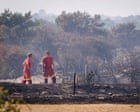
After this year's record-breaking summer brought devastating blazes across the country, the UK government is to create an artificial intelligence unit to spot wildfires. Its job will be to catch the early signals of fire so that crews can act faster.
Britain experienced its hottest-ever summer this year, with prolonged dry periods and extreme heat fuelling wildfires that triggered an emergency alert to mobile phones in England and Wales. Figures released on 8 October showed a clear upward trend in the number of fires recorded each year.
The Met Office found that the climate crisis made this extreme heat about 130 times more likely — a sign that heat once treated as exceptional is becoming far more regular.
At the government's first wildfire resilience summit on Friday, Andy Burnham will announce plans for a new wildfire AI unit in the National Situation Centre, which is part of the Cobra briefing rooms. The government said the new unit would enable it to spot and fight fires faster.
Businesses including Google, Airbus and VodafoneThree are expected to attend the summit to set out how satellite monitoring and early warning systems can help fight fires.
The prime minister will also announce £45m for fire crews to buy wildfire-specific personal protective equipment. That follows revelations that more than half of the 29 fire services that responded to requests for information had no wildfire PPE at all.
They included the Suffolk fire and rescue service, which had to deal with an 'apocalyptic' wildfire earlier this summer that burned close to the Sizewell B nuclear power station and destroyed vast areas of a protected nature reserve.
Standard particle-filtering respirators do not protect against dangerous gases such as carbon monoxide, which are heavily present in wildfire smoke. Standard PPE can also be too hot and heavy for wildfire conditions, causing crews to overheat or remove their PPE altogether and exposing them to greater danger from heat, smoke and radiation.
Military planes and helicopters will also be made available to fight wildfires on remote moorland, steep hillsides and other hard-to-reach terrain. Defence Secretary Wes Streeting said that as the threat of wildfires in the UK grows, defence will step up to provide greater support to emergency services and protect military training areas across the country.
The government will also look at tougher local restrictions or product bans to stop people starting fires when the risk is high. In August, Burnham announced a temporary ban on sales of disposable barbecues. He has also been criticised for failing to address the climate emergency in his wildfire response.
Farmers will be given funding to make landscapes more resilient to fires, and £25m will go to restore dried-out peatlands in England so they hold more water and act as natural firebreaks, alongside financial support for farmers to fireproof their land. The new grant scheme is expected to run from April 2027 to April 2029.
Environmental campaigner and author Guy Shrubsole said wealthy grouse moor owners have for decades drained peat bogs, turning them into a tinderbox; the grant will help reverse that destruction, but must be followed by new landscape recovery funding and duties on landowners to repair the damage done.
The prime minister said he stood in Stourbridge and watched families lose everything, and will never forget it; firefighters were heroes that day, but heroes should not have to fight with one hand tied behind their backs. Crews will now have the kit they need to stay safe and military aircraft will stand ready to help tackle wildfires from the sky, he said, adding that people cannot be put through another summer like this one.