

RIBA prize for Rangpur Karupannya factory highlights Bangladesh architects’ unique run
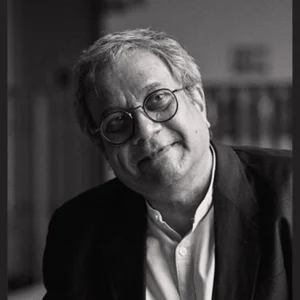
The prestigious international prize of the Royal Institute of British Architects (RIBA) has been awarded to the Green Field factory of Karupannya in Rangpur. Designed by architect Bayejid Khondkar and his firm Nakshabid Architects, the project has added another architectural honour to Bangladesh's tally.
This is not the first time a building in Bangladesh has won the prize. Kashif Chowdhury, architect of the Friendship Hospital in Satkhira, won it in 2021. Since the prize began in 2015, five people have been honoured with it, two of whom are from Bangladesh.
The Karupannya factory was selected from four shortlisted projects, two of which were in Bangladesh. The other was the BRAC University campus in Dhaka, designed by the Singapore firm WOHA.
That shortlist was chosen from 34 projects listed for the RIBA International Awards for Excellence 2026. The list included another project from Bangladesh — the Zebun Nessa Mosque designed by Sayka Iqbal Meghna of the firm Morphogenesis.
Bangladeshi architects have won many other notable international prizes before. Among them is the Aga Khan Award for Architecture, one of the most prestigious honours in the field. Kashif Chowdhury and Marina Tabassum won it separately in 2016, Saiful Haque in 2019, and Khandaker Hasibul Kabir, Suheilie Farzana, Rizvi Hasan, Khaja Fatmi and Sad Bin Mostafa in 2022.
Marina Tabassum won the award again in 2025, setting a record as the same architect winning it for a second time. Other award-winning projects in Bangladesh include the Grameen Bank Housing Project and the Bangladesh National Parliament Building designed by Louis I Kahn.
In terms of winning this award, Bangladesh ranks second highest, behind only Iran. In addition, Bangladeshi architect and civil engineer F R Khan won the award for designing the Hajj Terminal of Jeddah airport.
Beyond these, Bangladeshi architects have at various times received the Commonwealth Association of Architects (CAA) Awards, JK Cement Awards, International Union of Architects (UIA) Awards and ArcAsia Awards, among other international prizes and recognition.
Measured by numbers, the achievement is even more remarkable. Bangladesh is a small country with around 5,000 registered architects — compared with roughly 150,000 in India, 6,000 in Pakistan, 130,000 in the United States and 28,000 in the United Kingdom. By that comparison, it can certainly be said that Bangladesh has done better than neighbours India, Pakistan, Sri Lanka, Thailand and Malaysia.
Why this has happened has no single answer. Whether it is genetic, a result of training and education, or a matter of passion — no single specific cause can be identified. Several reasons can be imagined behind the making of good architects in the country, but there is no specific evidence, data or research to support them; they are only observations about the country's architectural culture.
At the start of this tradition stands Muzharul Islam, the pioneer of modern architecture in this country and region. The examples of his world-class projects, built from the Partition era through the 1980s, remain before generation after generation — he set not only examples of good buildings but also a standard of high ethical values and devotion to the profession.
The new recognition for Karupannya is the latest addition to that long tradition. That an industrial building like a green field factory can earn a place among the world's finest architecture is being seen as proof of the maturity of design thinking among Bangladesh's architects.


