

Two ministers and an MP resign in eight months: relief or embarrassment for the government?
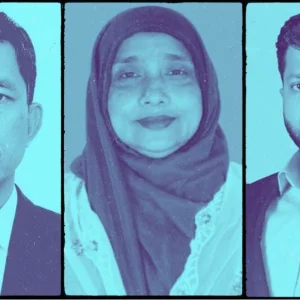
Within eight months of the BNP government led by Tarique Rahman, two members of the cabinet and one member of parliament have had to resign. The fall of three important figures before the government completes a year is being analysed in different ways. Some believe the prime minister has sent a strong warning signal to others through this. The question is whether the move has relieved the government or left it embarrassed.
First, Chittagong Hill Tracts Affairs Minister Dipen Dewan resigned on 1 June, followed by reserved women's seat MP Ferdousi Ahmed Mishti on 1 October, and most recently State Minister for Liberation War Affairs Ishrak Hossain on 19 October. In all three cases, swift action was seen in the face of controversy.
Analysts say the government needs to strengthen its overall vigilance and bring everyone from the centre to the grassroots under accountability. They have also raised the question of whether merely removing an individual improves the situation.
Bazlur Rashid Firoz, general secretary of the Bangladesher Samajtantrik Dal (BASAD) and a political analyst, said: 'At the three-month mark of the government, Chittagong Hill Tracts Affairs Minister Dipen Dewan had to step down. Many say this happened because of a conflict with the state minister of the same ministry.'
He said: 'MP Ferdousi Ahmed Mishti's name came up in the attack on the Radda health centre in Mirpur. On the other hand, State Minister Ishrak Hossain recently landed the government in an extremely embarrassing situation by pointing a pistol during an anti-drug raid in film style. So the prime minister took action before the situation took a different turn. That is a good side. Through this, the government may have wanted to send a kind of message to the people. But it is hard to say that the government's crisis will end just by taking swift action in three incidents. Rather, it is essential to keep their position more transparent on bribery, corruption, ending partisan favouritism and anti-state agreements.'
Dipen Dewan was the first to resign, on 1 June this year, three months into the government's tenure. He submitted his resignation citing physical illness. However, many reacted in various ways to the departure of a full minister like him.
The next morning (2 June), BNP central assistant secretary for tribal affairs and former army officer Manish Dewan wrote a long post on his verified Facebook account. He wrote that Dipen Dewan lost his ministry over a dispute about recommendations for the Rangamati District Council chairman nomination. According to him, Dipen Dewan had recommended freedom fighter Lt Col Manish Dewan for the nomination, while State Minister for Chittagong Hill Tracts Affairs Barrister Mir Helal wanted district BNP president Dipen Talukdar Dipu. Manish Dewan alleged that in this conflict, Dipen Dewan was made to resign against his will.
After Dipen Dewan, BNP-nominated reserved women's seat MP Ferdousi Ahmed Mishti resigned on 1 October on the prime minister's orders. She faced allegations over the vandalism of the Radda health centre in Mirpur, which drew widespread criticism, and her involvement was found. In this context, the prime minister took stern action against her. Immediately after her resignation, her seat was declared vacant. A by-election to that seat is scheduled for 29 October.
Most recently, on 17 September, State Minister for Liberation War Affairs Ishrak Hossain pointed his own pistol during an anti-drug raid in Gendaria in the capital. The photograph was published in various media and went viral on social media, putting the government in an extremely embarrassing situation.
A day later, several media outlets reported at night that the prime minister had ordered him to resign. Ishrak initially dismissed the matter as a rumour. However, the next morning, Monday (19 October), he announced on his verified Facebook account that he would resign. Finally, at 2pm, he announced his resignation at a press conference at the National Press Club.
Politicians are split on whether the departure of three important office-holders in eight months has actually challenged the government or given it relief. One side says the government will not take responsibility for any individual; swift action is being taken against controversial figures before criticism builds, sending a big message to others.
The other side believes the country's overall situation is not good, with the same picture from top to grassroots, and that the government is failing to control the law and order situation — something these incidents prove. Khelafat Majlis Nayeb-e-Amir Ahmad Ali Qasemi said: 'These incidents have exposed the government's internal weakness. We believe removing someone will not solve the crisis. Rather, the accountability of the government's ministers and MPs must be ensured.'
At an event in the capital on Monday afternoon, National Citizen Party (NCP) member secretary and MP Akhtar Hossain said: 'Ishrak Hossain had to take up arms because of the government's failure as the law and order situation deteriorated. There is no sign of any government initiative by which the law and order situation of Bangladesh will improve merely through his resignation.'
On the other hand, many see the resignations as a warning to others and evidence of the government's goodwill in eliminating crime. Saiful Haque, general secretary of the Revolutionary Workers Party of Bangladesh, said: 'There are some problems inside the government. The government certainly cannot hide that. But their sincerity in working together with everyone is noticeable. Those whom the prime minister has ordered to resign — there is certainly a positive effect to it. Others will also get a chance to be careful through this.'
BNP Vice Chairman Shamsuzzaman Dudu said: 'The government is not sparing any criminal. In light of that, the prime minister has directed two ministers and state ministers and one MP to resign. Yet in the past, many got away with wrongdoing through partisan considerations. In my view, others can learn a lesson from this. Whether it is relief or embarrassment for the government is not the point.'
All in all, the three resignations have left both a message and a question for the government — the message that there is no exemption for those caught in controversy has been strengthened, while questions remain over accountability and the overall law and order picture. How the government carries this forward in the coming days remains to be seen.


