France Braces for Possibly Worse Second Weekend of Riots as Macron Heads to Gulf
The US State Department has warned that France could face a potentially more confrontational second weekend of protests after riots swept the country. An internal document cautions that antifascist groups are planning more demonstrations near the far-right National Rally's convention, which could expose further security shortcomings and deepen political tensions. Meanwhile President Emmanuel Macron has faced sharp criticism for leaving for a Gulf trip while violence rocked his country.
According to the State Department document, Marine Le Pen's National Rally will hold its political convention on October 24-25 in Orleans. Antagonists are planning more demonstrations near the convention venue, the document warns, at a particularly dangerous political moment for Macron, because the same unrest that exposed his government's security vulnerabilities could give National Rally and centre-right parties an opening to challenge his record.
Left-wing parties, unions and activist groups are planning a march on Saturday, while antifascist groups have announced a separate protest on Sunday near the convention venue. Le Pen is set to launch her presidential campaign at the two-day congress. National Rally President Jordan Bardella has ruled out cancelling the congress, while local authorities are preparing additional security restrictions around the gathering.
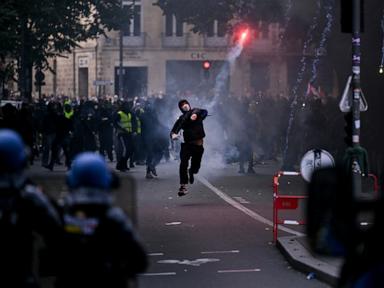
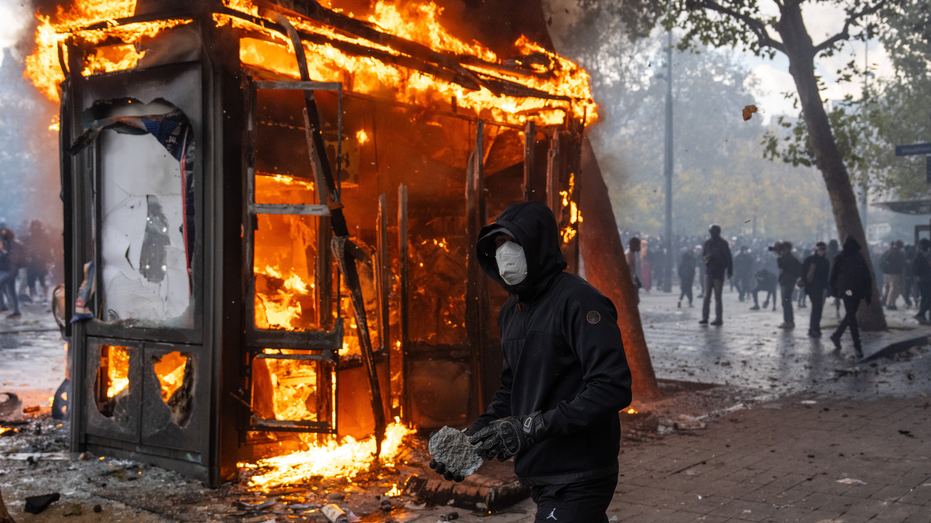
France is still reeling from the October 17 unrest, when authorities badly underestimated the scale of demonstrations that descended into widespread rioting and looting. According to France's Interior Ministry, some 550,000 people joined 110 marches nationwide. More than 2,400 people were arrested, nearly 1,000 law enforcement officers and firefighters were injured and thousands of businesses were damaged.
Intelligence failures that far underestimated the turnout left authorities overwhelmed and facing more than double the protesters originally estimated. The State Department assessment notes that the violence has reshaped France's political debate just six months before voters choose Macron's successor, shifting attention from the economic and education grievances that initially drove the protests towards public security and government accountability.
French officials have acknowledged that intelligence and planning failures contributed to authorities being overwhelmed. Interior Minister Laurent Nunez offered his resignation after acknowledging police lost control in some major cities. Macron rejected it, citing the need for continuity in law enforcement command, and ordered full transparency over the failures. Nunez has said authorities need to improve their ability to anticipate large-scale mobilisations.
Macron's Gulf trip has created fresh controversy. He pressed ahead with a trip to the Arabian Gulf for energy negotiations as violent riots rocked France. He left for Kuwait on Sunday, shortly after denouncing the unbridled violence of the rioters in a nationwide address. Defending his travel, Macron noted that heightened fuel prices were, in his telling, one of the causes behind the ongoing riots.
French officials say more than 2,500 people have been arrested in connection with the demonstrations. Although Macron acknowledges failures in security, he declined his interior minister's resignation. He received criticism from the left and the right: Le Pen charged that France under Macron was a country caught in a vice between violence and impotence, while from the left, socialist presidential candidate Jean-Luc Melenchon accused Macron's government of relying on inaction and police brutality to quell the riots.
The demonstrations come as France's presidential election looms. Macron is term-limited, and his centrist allies face an increasingly difficult political environment as figures including Le Pen on the right and Melenchon on the left seek to capitalise on growing discontent. Political observers have suggested the riots could help Le Pen, a staunch critic of immigration, at the polls. Macron was also criticised for attending a concert while the riots were ongoing.
Violence cooled after officials implemented overnight curfews in Paris and other major cities, but not before rioters inflicted over $1 billion in estimated damages, including destroying small businesses and setting fire to historic buildings, according to an analysis from financial services firm Morningstar. President Donald Trump warned that France is burning.
Attention now turns to the weekend in Orleans. If security forces handle a second round of protests, the government will gain some relief; if violence spreads again, pressure on Macron's government will grow further and the political calculations before the election will shift again.