Fierce courtroom clash over 500 trees felled at Washington golf course, top DOJ official confronts judge
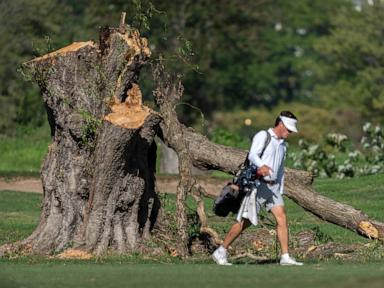
The removal of more than 500 trees from a public golf course in Washington, D.C. sparked a contentious federal court hearing on Monday, as a judge pressed the government on whether she had been deliberately misled about why the trees were cut down.
D.C. District Judge Ana Reyes had ordered testimony from Interior Department official Gregory Wischer and acting Director of the National Park Service Jessica Bowron over why the government moved abruptly on Columbus Day weekend to remove more than 500 trees from the East Potomac golf course without giving her proper advance notice.
Just last week, Reyes had erupted at government attorneys after the trees were removed despite her demand that the administration alert her in advance if it planned any significant alterations to the course, given the ongoing litigation.
The golf course is the subject of litigation brought by the D.C. Preservation League in response to President Donald Trump's efforts to turn it into a course that could host professional tournaments.
Reyes has questioned the motive for the tree removal, saying during Monday's hearing that there appeared to be a strong showing of bad faith on the government's part. The government keeps pointing to a 2019 Cultural Landscape Report calling for the removal of dead, dying and hazardous trees around the course, while Trump has posted on social media about moving ahead with renovations.
Trump announced in a Sunday social media post that full-scale renovations of East Potomac would begin on Nov. 15. It is unclear whether that start date will hold, given that Reyes is currently blocking the administration from proceeding with any major construction on the course.
The hearing got off to a contentious start immediately, as Associate Attorney General Stanley Woodward, the Justice Department's No. 3-ranked official, clashed with Judge Reyes over why none of the department's lawyers on the East Potomac case have joined him in signing his recent legal briefs.
Woodward said he would instruct each attorney not to answer Reyes' question. Reyes then ordered Woodward to submit a brief by 3 p.m. Monday explaining the legal rationale behind that instruction.
The government's justification for the tree removal has focused on the 2019 report. It claims the removals are not related to the Trump administration's separate planned wholesale redesign of the golf course.
Attorney Abbe Lowell repeatedly pressed Wischer during the hearing over whether the 2019 report was a credible explanation. Wischer, a political appointee, sought to maintain that the removals were entirely about cleaning up the course and not tied to Trump's renovation efforts.
Ahead of the hearing, tensions rose further when Trump attacked Reyes in a social media post, after she rejected an overnight effort by the Justice Department to disqualify her from continuing to preside over the case.
In his motion, Woodward had argued that Reyes harboured a clear political bias against the Trump administration. In response, Reyes said it is easy to weaponize selective quotations to bring a baseless recusal motion, but much harder to meet the demanding legal standard against a full record — and that by any objective measure, the government fails to meet that standard.
For now, the judge is blocking major construction on the course. The legal fight over the felled trees has therefore raised not only the future of one golf course, but also questions about the administration's compliance with court orders. Attention now turns to the government's brief and the next hearing.