France in turmoil as partial curfew imposed in four cities for two nights
France remains in turmoil amid protests over rising prices and fuel costs, deteriorating public services and a housing crisis. After the worst of the violence, the government has imposed a partial curfew in four northern cities, including Lille, from 8pm Monday to 6am Tuesday and again from 8pm Tuesday to 6am Wednesday.
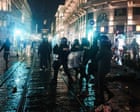
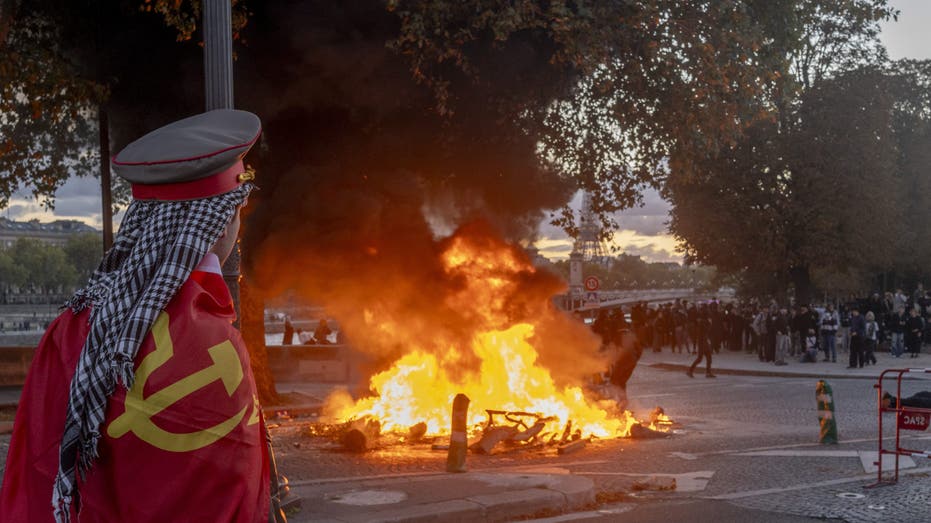
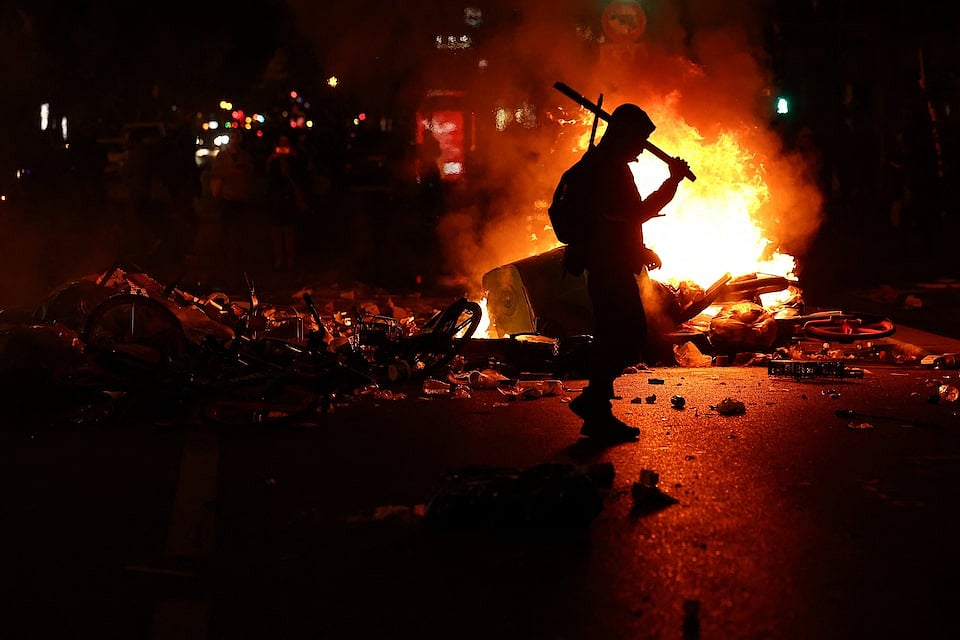
On Saturday, around half a million people took part in protests across France. Although the programmes were peaceful in many places, they later turned violent. Government buildings were set on fire and shops were vandalised and looted. Streets were filled with smoke from smouldering fires and scattered broken glass.
More than 2,500 people were arrested in connection with Saturday's protests. Authorities say around a thousand security personnel were injured. There was also a report that a protester lost a hand to a police crowd-control grenade.
The number of damaged businesses has passed three thousand. Trade organisations estimate the damage could reach several hundred million euros. Reuters reported that in Paris alone, three to four hundred businesses were vandalised, and the doors and windows of luxury shops in the city were also damaged.
Citing the office of Prime Minister Sebastien Lecornu, AFP reported that the partial curfew will remain in four northern cities for two nights, one of them Lille, with restrictions in force from 8pm to 6am local time. Lecornu, however, ruled out the possibility of imposing a curfew across Paris all at once.
After an emergency meeting with ministers on Monday, the Prime Minister said, 'I am fully determined to restore public order.' He also said an emergency could be declared if needed to bring the situation under control.
In Marseille, local authorities banned public gatherings and protests from Monday afternoon until 8pm — not a curfew, but a separate ban on assemblies. In the northern city of Denain, a curfew had earlier been declared and later limited to minors in specific areas.
The movement in France began in late September with students protesting a teacher shortage and mismanagement in schools. Others angered by fuel price rises and the quality of public services later joined. Since March, diesel prices in the country have risen by about 40 percent and petrol by 25 percent. Around 60,000 security personnel were deployed to deal with Saturday's violence.
Even so, the mayors of Paris, Marseille and Lyon have demanded answers from the government over security preparations. In a joint piece published Monday in the French daily Liberation, they wrote, 'On Saturday, for the first time, we felt that vast parts of our cities had been left without any protection.'
Interior Minister Laurent Nunez offered to resign, but President Emmanuel Macron did not accept it. In a televised address on Sunday, Macron condemned the violence and stressed the need to distinguish peaceful protesters from those involved in vandalism and looting. Amid the tense situation at home, Macron on Monday began a three-day Gulf tour starting with Kuwait, aimed at securing fuel supplies; the tour also includes the United Arab Emirates, Bahrain and Qatar.
Digital Affairs Minister Anne Le Henanff alleged on Monday that goods looted over the weekend were being advertised for sale on several online platforms, and called for the listings to be removed quickly. Representatives of Vinted, Amazon, eBay, Leboncoin, Meta and TikTok were called in for talks. Vinted said it was working to remove suspicious listings; eBay said it could not confirm whether listings linked to looting had increased.
On Monday, protesters blocked the entrance to the Louvre Museum in Paris. Australian tourist Anne Boland, arriving after a long flight, found the museum closed; her advice to other tourists was, 'Stay home!' Dutch tourist Peter said that seeing burnt rubbish and broken glass on the streets made him feel he was walking through a 'war zone'.
The anger has spread beyond France to several other European countries. In Italy's Milan, protesters clashed with police on Saturday and Sunday; on Sunday, 271 people were taken to police stations in Milan, of whom 32 were arrested. Prime Minister Giorgia Meloni condemned the violence, saying people have the right to protest but not the right to set the city on fire.
In Spain and Portugal, people are camping in protest against rent pressure and the housing crisis; protests have also turned violent in Belgium and Albania. Although the demands differ by country, anger over the rising cost of living sits at the centre of many of the movements.
Where the situation goes now depends on the coming days. The Yellow Vests movement has called fresh protests for next Saturday, and trade unions have announced a nationwide strike for November 5. Meanwhile, Germany, Italy, Poland and several other countries have advised their citizens in France to avoid large gatherings.